


















This article will help you answer the question: “What is a platform bed?”. Actually, a platform bed is a base with built-in mattress support (slats or a solid deck), so you usually don’t need a box spring. Knickerbocker will make you understand the applications of platform beds, pros and cons, who it fits, detailed types, and a choosing checklist.
What is a platform bed?
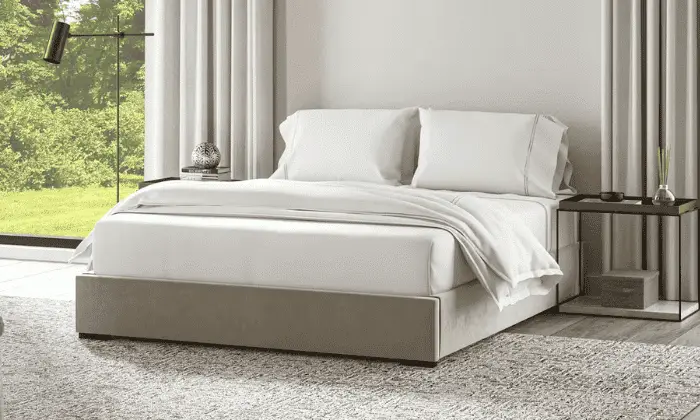
First, let’s be clear to understand what is a platform bed? The definition of platform bed is a bed base that has a built-in support surface—most commonly wood/metal slats or a solid/vented deck—designed to hold a mattress directly, usually without a box spring.
A platform bed supports your mattress in one of two main ways:
- Slatted platform: Evenly spaced slats run across the bed. This promotes airflow and provides structured support.
- Solid or semi-solid deck platform: A flat panel (sometimes perforated or paired with ventilation channels) supports the mattress more uniformly.
If you’re wondering how a platform bed compares to a traditional bed frame, check out our detailed platform bed vs bed frame guide to understand the key differences, benefits, and which option best suits your needs.
A quality platform bed also often includes center support (especially for queen/king sizes) to prevent sagging.
Applications of platform beds
The following will show you how we could use platform beds in our life:
Small spaces and simple setups
A platform bed used for apartments, dorms, and small rooms. Fewer parts and (often) more under-bed storage because platform beds may remove the box spring.
Modern, minimalist bedrooms
What is a platform bed in design terms? A streamlined base that fits modern interiors. If you like clean lines, a platform bed can fit easily.
Storage-driven households
What is a platform bed used for when storage is the priority? Drawer or lift-up storage. In this case, the platform bed is also an organizer.
Guest rooms, rentals, frequent moves
What is a platform bed used for in guest rooms and rentals? Fast resets: one base, one mattress. If you move a lot, a platform bed can be simpler.
Pros and cons of platform beds
Pros of platform beds
Platform beds provide strong, even mattress support without needing a box spring, making the setup simpler and often more stable. Many platform beds also offer a sleek, modern look and can include built-in storage to save space.
Cons of platform beds
Some platform beds are heavy and require more assembly, which can be inconvenient if you move often. Solid-deck designs may reduce airflow under the mattress, and low-profile frames can feel too low for some people to get in and out of comfortably.

Platform beds are suitable for which type of customer?
Platform beds are a good fit for these types of customers:
- Minimalists / modern-style buyers: You want a clean, low-profile look that works with contemporary bedrooms.
- People who want a simpler setup: You prefer “bed + mattress” without needing a box spring or extra foundation.
- Small-space dwellers (apartments, dorms, studios): You want a space-saving design, often with under-bed clearance or built-in storage.
- Storage-first customers: You need drawers or lift-up storage to replace a dresser or reduce clutter.
- Budget-conscious shoppers (total setup cost): You’re trying to reduce overall cost by skipping a box spring (while still getting solid support).
- Hot sleepers / people who want airflow: A slatted platform bed can improve ventilation under the mattress compared with some solid bases.
- Couples or light sleepers: A sturdy platform can feel more stable and reduce motion compared with an older, bouncy foundation.
- Guest rooms and rentals: You want a straightforward, durable base that’s easy to maintain and looks good.
Less ideal if you strongly prefer a very tall bed height or have mobility needs—unless you choose a higher platform with taller legs.
Types of platform bed
Slatted platform beds
Slatted platform beds use a series of evenly spaced wooden or metal slats to support the mattress. This is one of the most common platform styles because the slats provide structured, consistent support while allowing airflow beneath the mattress, which can help with cooling and moisture control.
When choosing a slatted platform bed, pay attention to slat thickness, how securely the slats are fastened, and whether the bed includes strong center support (especially for queen and king sizes). Slats that are too thin or spaced too far apart can lead to sagging and may not meet some mattress warranty requirements, particularly for foam mattresses.
Solid-deck platform beds
Solid-deck platform beds support the mattress with a continuous surface, such as a wooden panel or a composite deck. Because the mattress rests on a flat base, this type often feels very stable and uniform, which appeals to people who want firm, even contact under the mattress.
The key consideration with solid-deck designs is ventilation. A fully solid panel can reduce airflow under the mattress, so it’s smart to look for vented panels, breathable materials, or designs that create air channels. This helps prevent heat buildup and moisture retention, especially in humid climates.
Storage platform beds
Storage platform beds combine mattress support with built-in storage—most commonly drawers on the sides or foot of the bed, or a lift-up (ottoman) mechanism that opens a large compartment underneath. They’re a practical choice for small bedrooms, apartments, or anyone who wants to reduce the need for extra furniture like dressers.
To pick a good storage platform bed, focus on the hardware quality and layout. Drawer models need smooth, sturdy slides and enough clearance to open fully, while lift-up designs should have strong hinges, safe lift assist, and a solid frame so the bed stays stable when opening and closing.
Floating and low-profile platform beds
Floating platform beds use recessed legs or a hidden base so the bed appears to “float” above the floor, while low-profile platform beds sit closer to the ground for a sleek, modern look. These styles are popular in minimalist interiors because they make the room feel open and uncluttered, and they often pair well with simple bedding and clean lines.
Even though they look light, they still need serious structural support. Look for a rigid frame, strong center support, and a stable hidden base to prevent wobbling—especially with heavier mattresses. Also consider your comfort getting in and out of bed, since very low designs may not be ideal for everyone.

How to choose the right platform bed
Match your mattress requirements
Check your mattress brand’s support rules before buying: look for acceptable slat spacing, required center support (especially for queen/king), and whether a solid deck or a bunkie board is recommended for foam/latex mattresses, because the wrong base can reduce comfort and may affect warranty coverage.
Choose size, height, and storage layout
Pick the correct bed size for your room and lifestyle, then choose a height that’s comfortable to sit on once the mattress is added; if you want storage, decide between drawers (easy access but need clearance) or lift-up storage (maximum space but needs room to open and a heavier frame).
Inspect structure and materials
Prioritize a strong frame with reinforced joints, a center beam with legs for larger sizes, and sturdy slats or a rigid deck; solid wood and well-built metal frames are typically more durable than flimsy engineered panels, and good construction matters more than style alone.
Plan for assembly and noise control
Consider how complex the assembly is and whether you’ll move often, then look for features that reduce squeaks—tight hardware, secure slat locking, anti-slip pads, and center legs that firmly touch the floor—because a stable build is the biggest factor in long-term quiet comfort.
FAQ
What is the difference between platform bed and bed frame?
A platform bed includes a built-in mattress support system (slats or a solid/vented deck), so your mattress typically sits directly on the base and you usually don’t need a box spring. A traditional bed frame, on the other hand, is often just the outer frame/rails that requires a box spring or foundation to properly support the mattress.
Because of that, platform beds are often a simpler two-piece setup (platform + mattress), tend to be lower-profile and more modern, and commonly offer built-in storage options. Traditional bed frames are often taller due to the added box spring, can feel bouncier depending on the foundation, and may be cheaper upfront—but you may spend extra on the box spring/foundation.
Do I need a box spring when having a platform bed?
In most cases, you don’t need a box spring with a platform bed because the platform bed already includes built-in mattress support (slats or a solid deck) designed to hold the mattress directly. However, you should still check your mattress manufacturer’s requirements—some warranties specify maximum slat spacing or require a specific foundation—and a box spring might be used only to add extra height or if the platform’s support system doesn’t meet those guidelines.
What is a platform bed good for: foam, hybrid, or innerspring?
A platform bed can work well for foam, hybrid, and innerspring mattresses as long as the support surface is sturdy and meets the mattress maker’s guidelines: foam (memory foam/latex) usually needs closer slat spacing or a solid/vented deck to prevent sagging and keep the feel consistent, hybrids generally do well on strong slats with good center support because they’re heavier and need stable reinforcement, and innersprings are typically compatible with either slats or a deck as long as the base is firm and level (and for all types, a quality platform with proper center support is especially important in queen/king sizes).
What is a platform bed weight capacity?
A platform bed’s weight capacity is the maximum total load it can safely support, usually including the mattress + all sleepers + any added items (like bedding or storage contents for drawer/lift models). The exact number varies a lot by design, size, and materials—metal frames and well-braced solid-wood platforms often hold more than lightweight or low-cost builds—so the best approach is to check the manufacturer’s stated rating for your specific model and size, and choose one with strong center support (especially for queen/king) to handle weight evenly and reduce sagging over time.
How do I reduce squeaks in a platform bed?
To reduce squeaks in a platform bed, start by tightening all bolts and screws (especially at the rails, corners, and center support) because loose hardware is the most common cause of noise, then add padding where parts rub—felt tape, rubber washers, or foam strips between slats and the frame, and between the frame and headboard/footboard if applicable. Make sure the center legs are firmly contacting the floor (use furniture shims if the floor is uneven), secure or replace any shifting slats with locking slat holders or non-slip pads, and if the noise persists, apply a small amount of dry lubricant (like silicone spray) to metal-on-metal contact points—avoiding anything that can drip onto the floor or fabric.
Hope this article will make you know what a platform bed is. To be clear, platform bed is a simple, mattress-ready foundation that uses built-in slats or a solid deck to support your mattress—usually without the need for a box spring. If you want a cleaner look, a more stable feel, and the option for space-saving storage, a platform bed is a practical upgrade from many traditional setups.
To purchase a platform bed, you can contact Knickerbocker through our shop page, or reach out via email or phone to the relevant department listed on our “Contact Us” page for more detailed information. With a history dating back to 1919 and 100% of our products made in the USA, we will bring you the highest-quality platform beds and bed frames.