


















A bed frame isn’t just something to hold a mattress. The right bed frame affects sleep feel, mattress lifespan, squeaks, storage space, and even how your bedroom looks and functions day to day. If you’ve ever asked “what is a bed frame?” or wondered whether platform bed vs bed frame is the same thing, the answer comes down to one key detail: does the bed frame include built-in mattress support—or does it need an added foundation like a box spring? Knickerbocker will guide you to answer the question: “What is a bed frame?” and what are the benefits of this tool that affects your sleep.
What is a bed frame?
A bed frame (sometimes called a bedstead) is the structural framework that holds your sleep setup in place—often including side rails and sometimes a headboard/footboard—so the mattress stays stable and elevated. Many definitions describe the bed frame as the structure that positions and supports the base that supports the mattress.
People mix these terms up all the time:
- Bed frame: the outer structure (rails/legs/head-foot) that creates the “bed.”
- Bed base / foundation: the surface that directly supports the mattress (slats, solid platform, or a foundation/box spring).
- Box spring / foundation: a separate support layer used with some traditional bed frame styles.
This difference matters because some bed frame designs are “frame-only” (they need a foundation), while a platform bed frame is a frame and base in one.
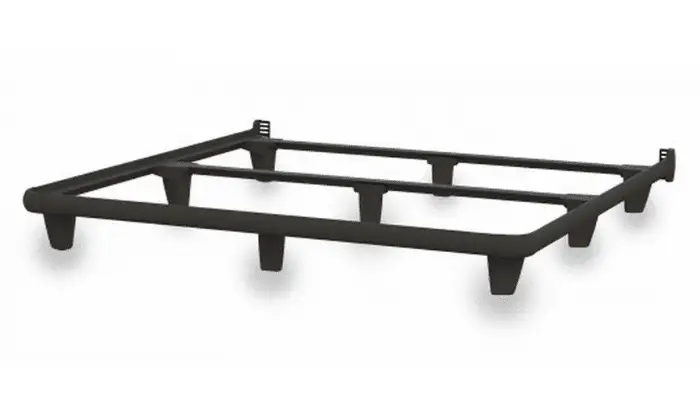
How a bed frame supports your mattress
Think of a bed frame like a mini structure in your room: it has to distribute weight, resist twisting, and stay quiet under movement.
Key parts you’ll see in most bed frame builds:
- Side rails: keep everything squared and prevent lateral shifting.
- Legs + floor contact points: influence stability and squeaks.
- Center support rail (especially queen/king): larger sizes often need a center rail and extra feet to prevent sagging over time.
- Support surface: either slats or a solid deck/platform.
From a bedroom-architecture perspective, the bed frame height and footprint also control:
- Under-bed storage potential.
- Airflow under the mattress.
- Sightlines (headboard height vs windows).
- Walking clearance around the bed.
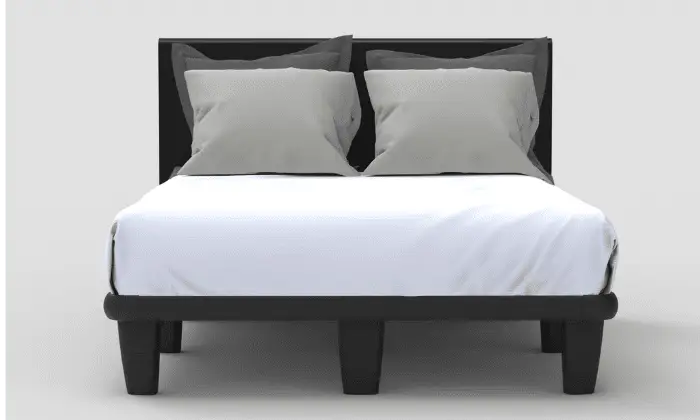
Quick review of types of bed frame
Here are the most common types of bed frame you’ll see when shopping:
- Metal rail bed frame (basic): A minimalist bed frame that often supports a box spring/foundation rather than the mattress directly.
- Panel bed frame: Often designed to use a mattress plus a box spring/foundation.
- Platform bed frame: A bed frame with built-in support (slats or a solid surface) so the mattress can usually sit directly on it—no box spring needed.
- Storage bed frame: A bed frame that integrates drawers or lift-up storage. Great for small bedrooms, but heavier and more complex structurally.
- Upholstered bed frame: A style-forward bed frame with fabric-wrapped rails/headboard; check for strong center support and quality slats.
- Canopy/four-poster bed frame: A bed frame with vertical posts; heavier, visually dominant, and needs more ceiling/room clearance.
- Low-profile / modern “floating” bed frame: A bed frame built for minimalism; verify center support and edge stability.
For Your Information: What is Platform bed king size? Types of King Platform bed frame
What is the difference between Platform Bed vs Bed Frame
We can say a platform bed is a type of bed frame. Otherwise, not every bed frame is a platform bed. A platform bed frame includes the base (slats or solid deck). A “traditional” bed frame might be only rails/legs and requires a separate foundation/box spring to create a full support surface.
Although the meanings of these two terms aren’t entirely clear, retailers often use them as two separate concepts. You should consult each retailer’s information to get the most accurate understanding of platform bed and bed frame, avoiding confusion that could lead to unsuitable decisions for your bedroom.

Does bed frame need box spring?
This is the #1 confusion point: does bed frame need box spring? The answer depends on the bed frame design and your mattress requirements.
When a bed frame usually needs a box spring/foundation
A bed frame often needs a box spring (or foundation) if:
- it’s a basic metal rail bed frame with no supportive slats,
- it’s a panel-style bed frame intended for mattress + box spring,
- its slats are too few, too weak, or too widely spaced.
When a bed frame usually does NOT need a box spring
A platform bed frame is built to support the mattress directly using slats or a solid deck. In that setup, the extra height/bulk of a box spring is typically unnecessary.
Slat spacing and warranty reality
Even when a bed frame has slats, spacing and strength matter. Many mattresses (especially foam/hybrid) perform best with consistent support, and some warranties specify maximum slat spacing. If slat gaps are wide, you may need a bunkie board or a proper foundation to protect comfort and avoid sagging.
Is a bed frame necessary?
If you’re asking if a bed frame is necessary, for most bedrooms the answer is yes—and not just for looks.
A bed frame is necessary when you want:
- Proper support geometry (especially in queen/king sizes with center support),
- Better airflow (mattress on the floor can trap moisture),
- Under-bed storage and easier cleaning,
- Better ergonomics (comfortable sit/stand height),
- A stable anchor for a headboard and a finished room design.
You can skip a bed frame only in limited situations (for example, a mattress designed for floor use in a dry climate with good ventilation), but it’s rarely the best long-term setup.

How can we use bed frame with adjustable base?
“Bed frame and adjustable base” compatibility is totally doable—but you need the right kind of bed frame.
Many adjustable bases are designed to sit inside a compatible bed frame (often called zero-clearance compatibility). Platform-style frames can also work if the platform/slats don’t block the base movement, or if the slats are removable.
Adjustable base and bed frame checklist
Before you buy (or before you try to fit the base into your existing bed frame), confirm:
- Internal dimensions of the bed frame match the adjustable base size.
- Side rails clearance: rails that sit too low or too far inward can stop the base from articulating.
- Remove/disable slats if the base requires sitting on the floor/legs inside the frame.
- Headboard/footboard brackets if you want your existing bed frame look with an adjustable base.
How to choose the best bed frame for your bedroom architecture
Treat your bed frame like part furniture, part structure:
Fit your floor plan, not just your mattress
- Leave comfortable walking clearance on both sides.
- In smaller rooms, a storage bed frame may replace a dresser.
Pick the right height
- Low-profile bed frame: modern look, easier ceiling sightlines.
- Taller bed frame: easier to get in/out, more storage.
Match support to mattress type
- Foam/hybrid mattresses often prefer consistent support—choose a platform bed frame with strong slats and reasonable spacing, or use a foundation if needed.
- Innerspring mattresses are often more forgiving, but still need center support on larger sizes.
Reduce noise and movement
A quiet bed frame usually has: a strong center beam (above queen size), tight hardware, solid slats and non-slip contact points between slats and rails.

FAQ and Quick Answers about Bed Frame
What is a bed frame in plain language?
A bed frame is the structural support system that holds your mattress setup stable and elevated, sometimes with a built-in base and sometimes requiring a separate foundation.
Platform bed vs bed frame—what’s the simplest difference?
A platform bed is a bed frame with built-in mattress support (slats/solid deck), while some traditional bed frame styles need a box spring/foundation.
Does bed frame need box spring?
Only if the bed frame doesn’t provide direct support (or if your mattress warranty requires a specific foundation). Platform bed frame designs typically don’t need one.
Can you use an adjustable base with a bed frame?
Yes—if the bed frame is compatible (often zero-clearance) and the base has room to move without hitting rails or a solid platform.
So, is platform bed versus bed frame the same? A platform bed is a bed frame, but it’s a specific kind of bed frame—one that includes built-in support so you usually don’t need a box spring. If you choose a bed frame based on real support engineering (center rails, slat spacing, and weight distribution) and your bedroom architecture (clearance, height, storage), you’ll get a quieter setup, better mattress performance, and a more functional room. For more information about bed frame or platform bed, please join us on the “Store” section, or contact Knickerbocker to receive more advice from our professionals. With hundred years of experience and 100%-made-in-the-USA guarantee, we offer the best service just for you, and bring you a good sleep!